
By the end, it didn’t feel like theatre – it felt like a party
The Choir of Man doesn’t have a traditional plot or single storyline. Instead, it unfolds as a snapshot of life inside The Jungle, a fictional pub that acts as the heart of the show. Here, a group of men from different walks of life come together, bonded by music, shared rituals, and the unspoken understanding that pubs so often provide. Through songs, spoken moments, and bursts of humour, the audience gradually pieces together their experiences of love, loss, joy, and friendship. It’s less about narrative progression and more about capturing the feeling of community — how strangers can become a family within the walls of a pub.
I’ll be honest: the first five minutes really made me cringe, and I genuinely thought The Choir of Man might not be for me. The pub banter felt a bit broad, a little forced, and I braced myself for an evening I’d politely endure rather than enjoy. But I was pleasantly surprised. Once the show found its rhythm, it won me over completely, and by the end I was having a great time. Think Pitch Perfect, but British, male, and set in a pub — loud, harmonised, and unapologetically heartfelt. The audience energy only reinforced that sense of fun and loyalty: the man sitting next to me mentioned it was his fifth time seeing the show, and the theatre was absolutely packed. It’s clearly a production with a dedicated following, and by curtain call, it was easy to see why.
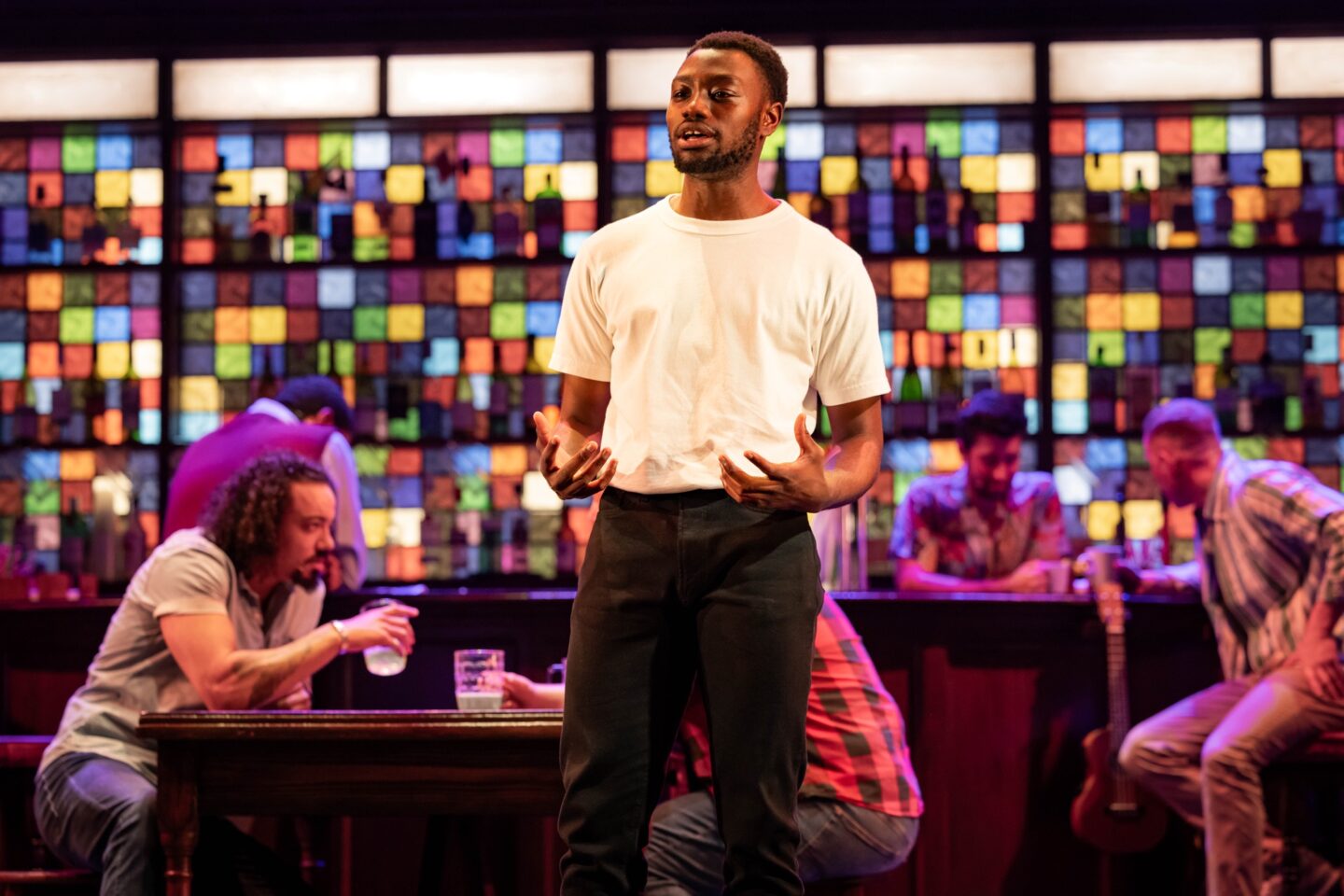
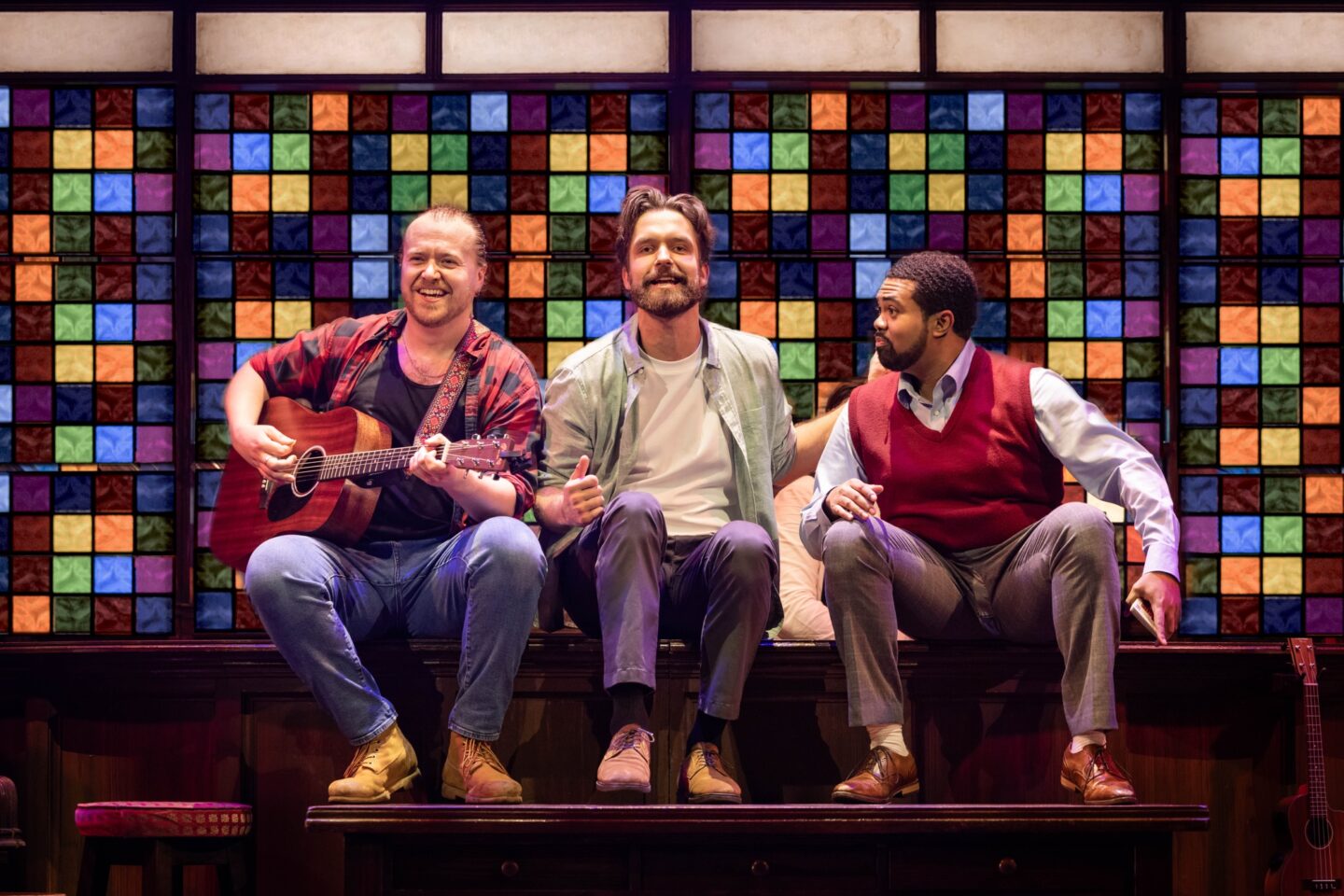
The stage remains fixed throughout, entirely set within The Jungle pub — but this isn’t just scenic dressing. It’s a fully working bar, immediately blurring the line between audience and performers. Before the show and again during the interval, cast members invite audience members up on stage for a chat, a dance, or simply a drink, reinforcing the idea that everyone is part of the same night out. At one point, the cast even walked through the crowd handing out free pints, with Joe managing to snag one, which only added to the convivial, inclusive atmosphere. By then, it no longer felt like sitting in a theatre watching a show; it felt like being dropped into the middle of a lively party where music, performance, and real human interaction merge seamlessly.
Another detail that adds to the show’s authenticity is that the cast perform under their real names, each given a pub‑style nickname reflecting their role within the group. Nimi Owoyemi, known as “The Poet,” serves as the show’s narrator and emotional throughline. One of the most affecting moments comes when Owoyemi introduces each cast member in turn, sharing snippets of their personal histories and how music has shaped their lives. A glance at the programme confirms these stories are genuine. Rather than playing characters, the performers are essentially sharing themselves, which gives the show its warmth and emotional credibility.
Speaking of Owoyemi, his rendition of Luther Vandross’s Dance with My Father was genuinely heartbreaking. Delivered with such emotional honesty, you could feel the audience collectively hold its breath — I spotted more than a few people discreetly wiping away tears. Jack Skelton, appearing as “The Handyman,” proved to be a serious multi‑hyphenate, not only singing confidently but also tapping with impressive precision. In fact, every member of the cast plays at least one instrument, reinforcing the sense that this is a true collective rather than a conventional ensemble.
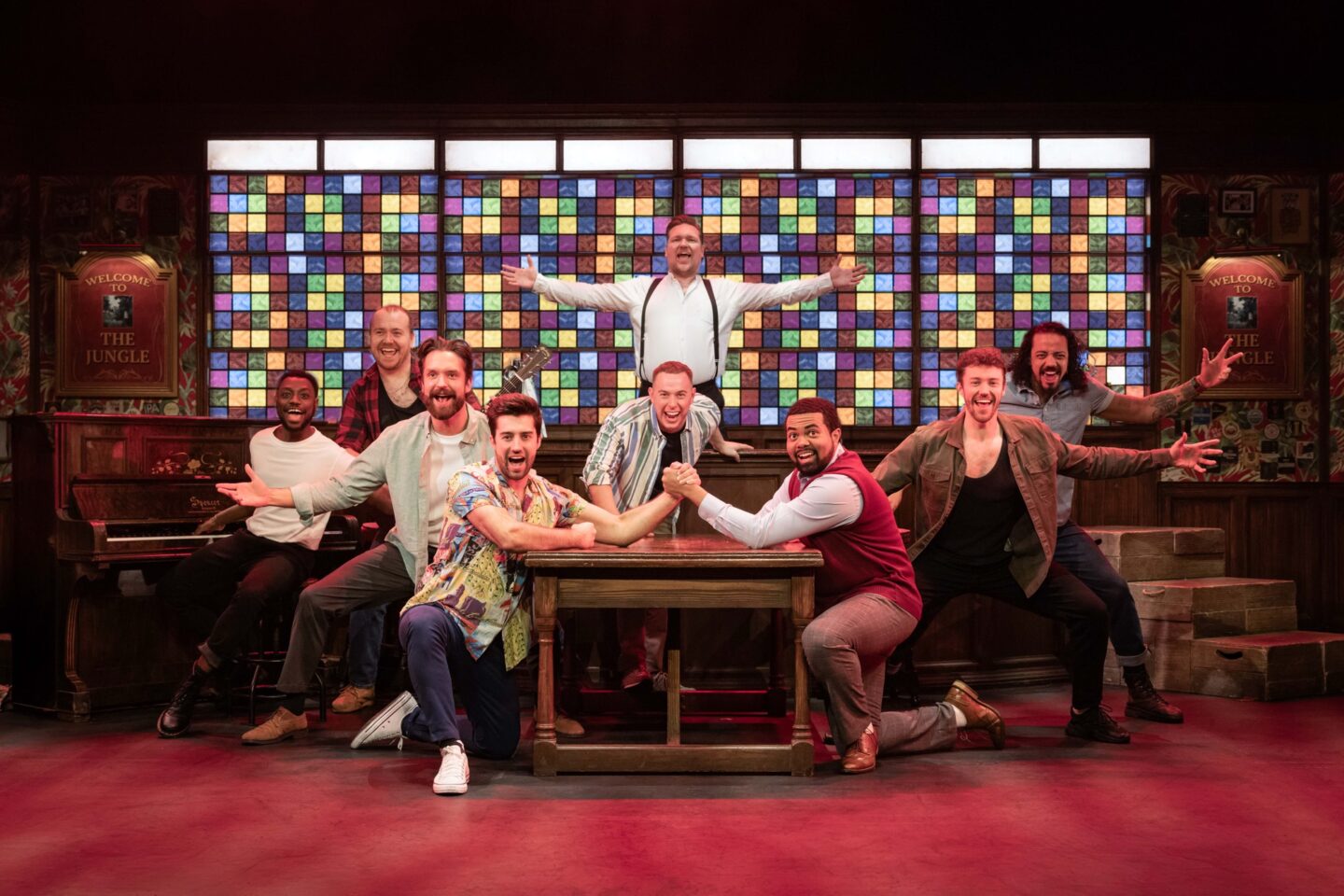

Rob Godfrey’s “The Beast” brought effortless charm, serenading a woman from the audience with a playful rendition of Katy Perry’s Teenage Dream, while Sam Ebenezer, as “The Romantic,” absolutely smashed Adele’s Hello, earning one of the biggest reactions of the night. Comedy also plays a huge role, none more so than a riotous scene set in the men’s toilets featuring Ben Mabberley as “The Joker,” where the cast unexpectedly break into Red Hot Chili Peppers’ Under the Bridge. It’s absurd, hilarious, and oddly tender — a perfect example of how the show balances humour with sincerity.
Niall Woodson, appearing as “The Bar Man,” led Sia’s Chandelier, and my goodness — the man has some serious pipes. It was one of those moments that stops you in your seat, both vocally thrilling and emotionally charged. Musical director Gustav Melbardis, known as “The Maestro,” was phenomenal on the piano throughout, but his tongue‑in‑cheek take on 500 Miles by The Proclaimers was a standout. Pulling a woman up from the audience to serenade her, the moment was laugh‑out‑loud funny, made all the better by how gamely she leaned into it — huge respect to anyone brave enough to volunteer. I certainly couldn’t.
Aaron Pottenger as “The Bore” was consistently hilarious, often stealing moments through nothing more than well‑timed facial expressions; you could rely on him to raise a laugh regardless of the song. Levi Tyrell Johnson, “The Hard Man,” was equally impressive, featuring strongly in Under the Bridge, Chandelier, and delivering a rousing, show‑stopping You’re the Voice that brought the house down.
Finally, a huge bravo is deserved for the 100‑strong Brighton Busketeers Choir, who joined The Choir of Man towards the end of the show to reprise Chandelier. The sound was immense, filling the theatre with joy and unity — a genuinely spine‑tingling moment that gave me goosebumps. It perfectly encapsulated what this show does so well: bringing people together through music, generosity, and pure feel‑good energy.
As the curtain falls one final time, The Choir of Man makes its last appearance at Theatre Royal Brighton on Saturday 25th April. Evening performances run Wednesday, Thursday and Saturday at 7:30pm, with Friday evening at 8pm. Matinées are available Friday at 4pm and Saturday at 2:30pm, offering a final chance to raise a glass and experience this joyous, feel‑good show before it takes its final bow. Book HERE.